Glass fiber
ISO NOISE Standard
Glass-fiber batt for the cavity of lightweight and double-leaf walls
- Size
- 60 × 120 cm
- Thickness
- 50 mm
- Packaging
- Clear PE bag · 6 sheets per pack
- Reference price
- 180 THB / sheet
Reference price. Please confirm current pricing and delivery with our team.
ISO NOISE Standard
Glass-fiber sound insulation batt wrapped in a clear PE bag, made by an SCG factory certified to Thai Industrial Standards (TIS). It is installed inside the cavity of lightweight walls, double-leaf masonry walls or ceilings to raise the sound insulation of the system without adding wall thickness.
- Made by an SCG factory certified to TIS
- Installed in its bag — no adhesive
- For interior wall and ceiling cavities
Standard and Premium give the same sound-insulation benefit inside a wall cavity. For exterior or humid locations, choose Premium.
Specifications
| Material | Glass fiber |
|---|---|
| Size | 60 × 120 cm |
| Thickness | 50 mm |
| Packaging | Clear PE bag · 6 sheets per pack |
| Best for | Interior lightweight walls and ceilings: bedrooms, meeting rooms, rehearsal rooms |
Sound absorption coefficients of the material
The values below describe the sound absorption of the material itself. They are not the sound insulation of a wall — sound insulation (STC) is a property of the complete wall system.
| Frequency (Hz) | 125 | 250 | 500 | 1000 | 2000 | 4000 | NRC |
|---|---|---|---|---|---|---|---|
| Absorption coefficient | 0.12 | 0.65 | 0.91 | 0.98 | 0.84 | 0.59 | 0.85 |
Source: Standard catalogue The source document does not state the test standard or laboratory.
Performance inside a wall system
According to the supplier, filling the cavity raises the sound insulation of lightweight and double-leaf masonry walls by about 7–10 dB compared with the same wall with an empty cavity, without adding wall thickness or weight.
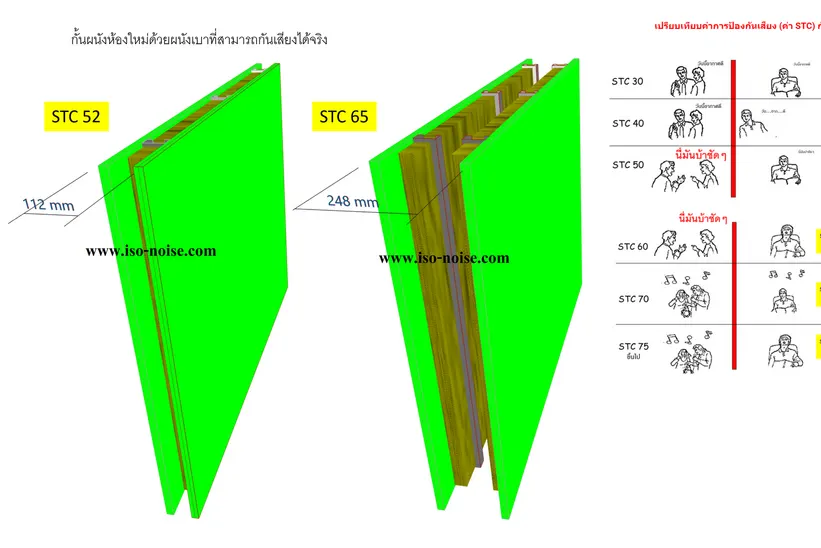
The result on site depends on every part of the system: board type and number of layers, framing, cavity depth, joints, doors and windows. The batt on its own has no STC rating.
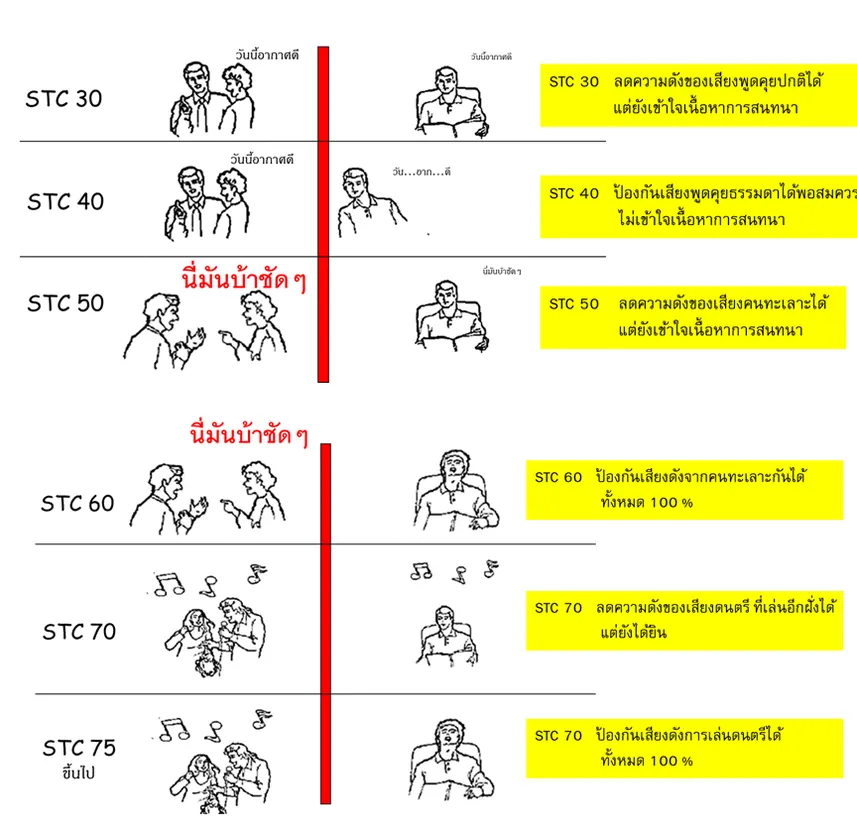
- STC values of wall systems commonly used in Thailand (Thai)
- Recommended wall and ceiling systems by application (Thai)
Recommended applications
View all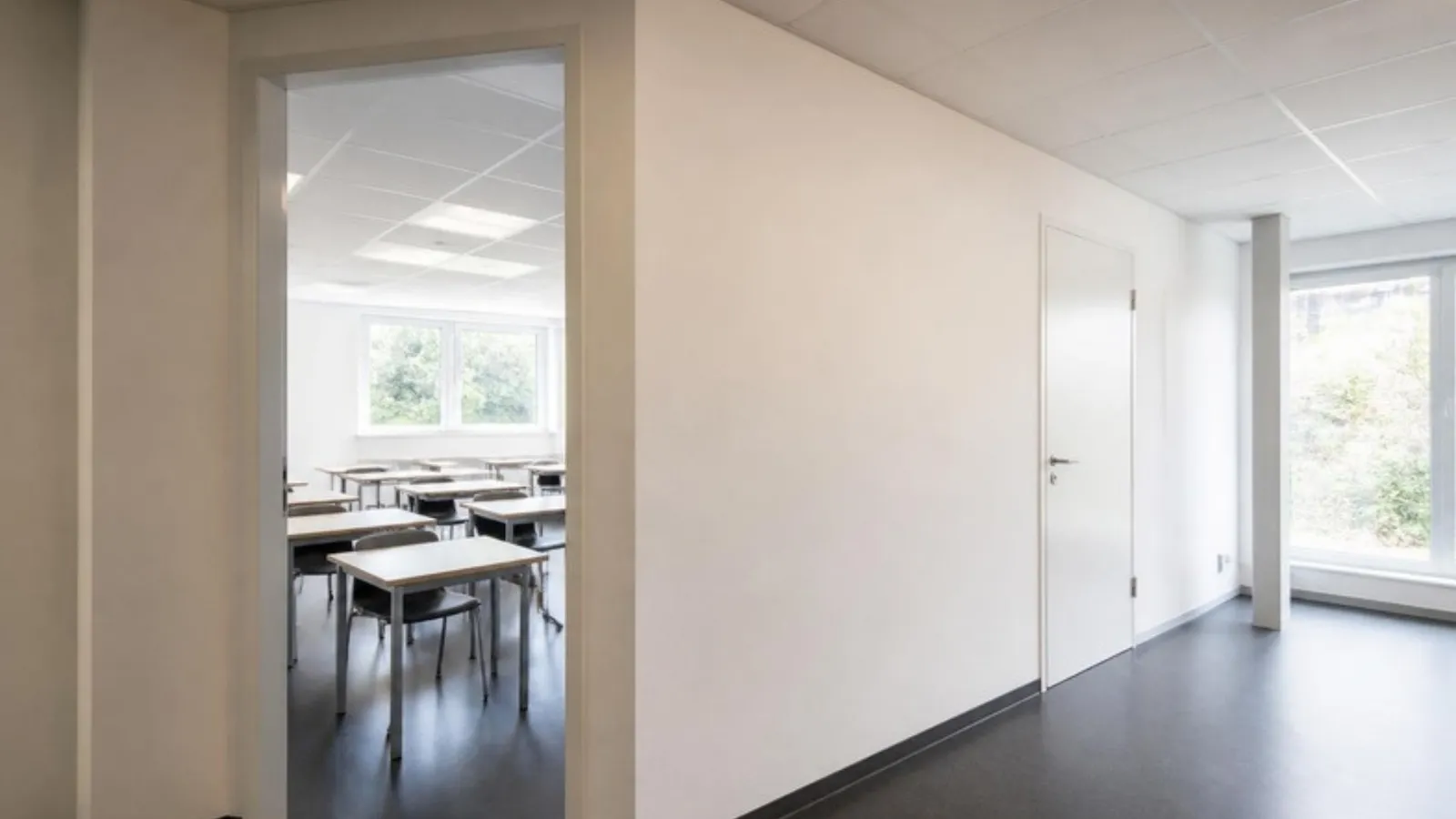
Offices & meeting rooms · Thai only
Partition walls that really insulate: meeting rooms, classrooms, bedrooms
Homes & residences · Thai only
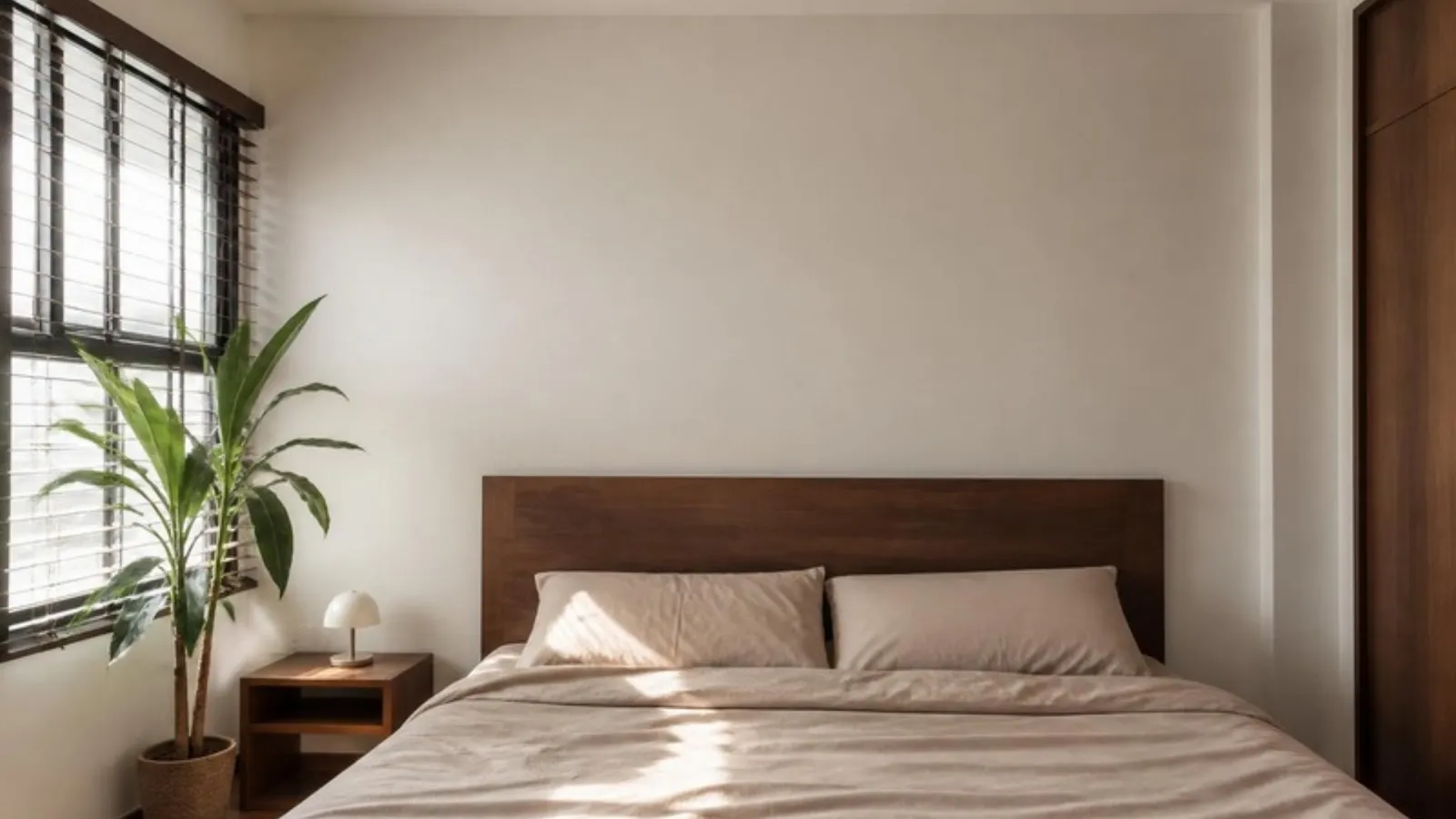
Fixing noise coming through a condominium party wall
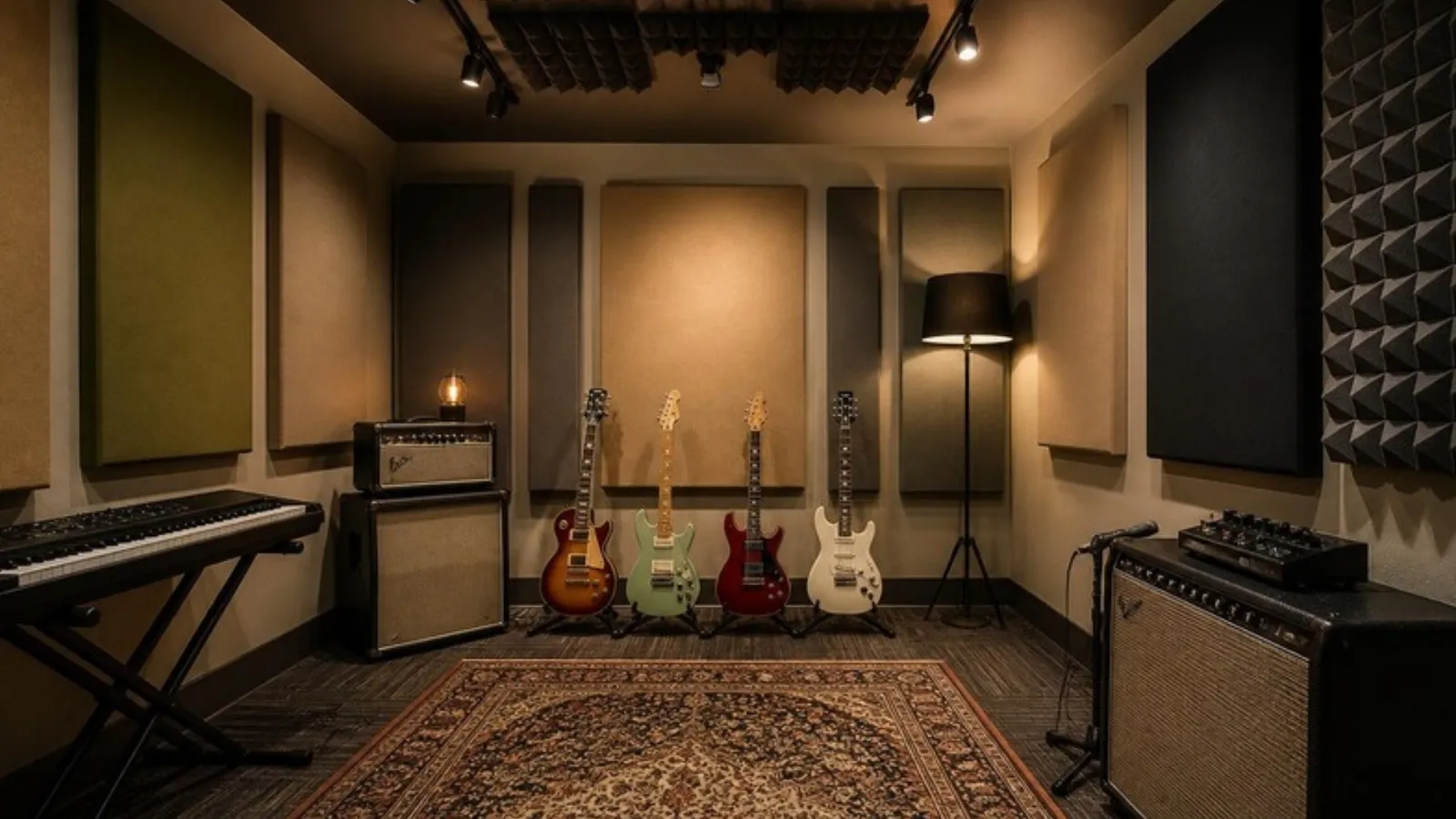
Music & entertainment rooms · Thai only
Building a soundproof music rehearsal room
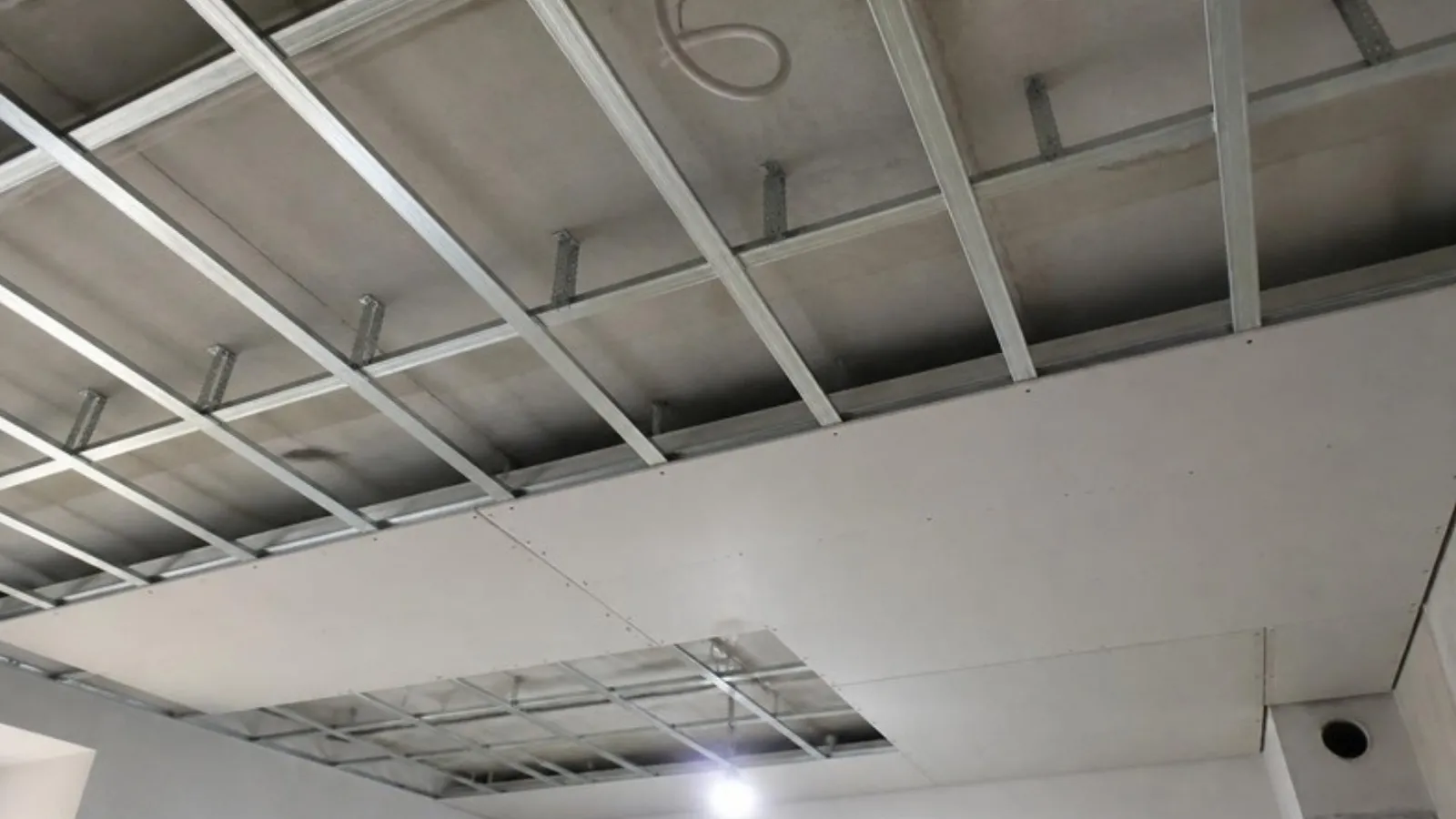
Walls, ceilings, doors & windows · Thai only
How to build a two-layer sound-insulating ceiling
Installation
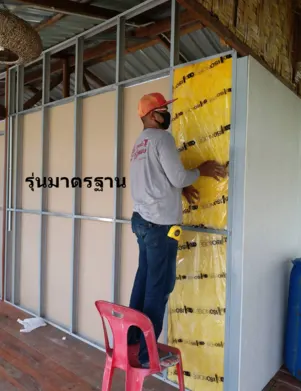
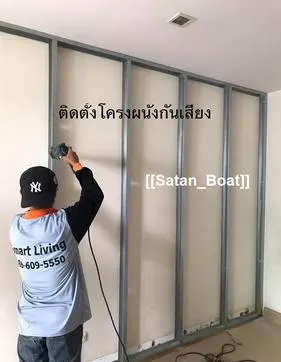
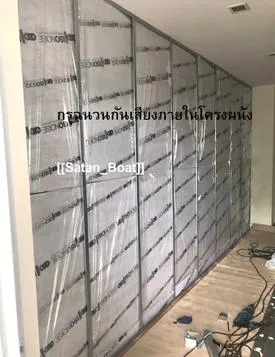
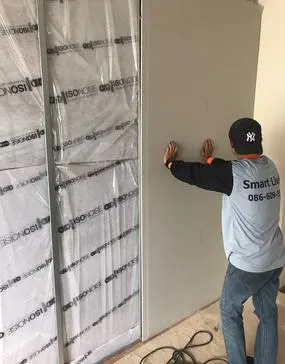
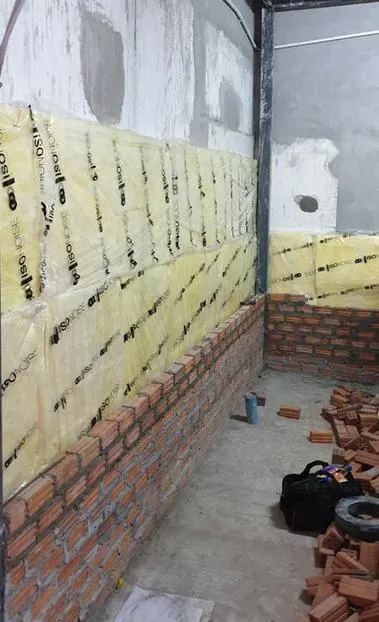
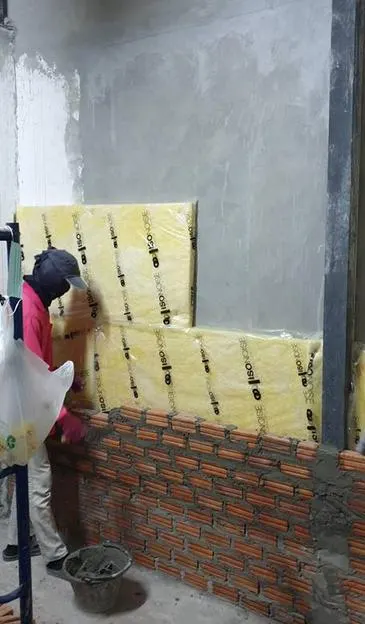
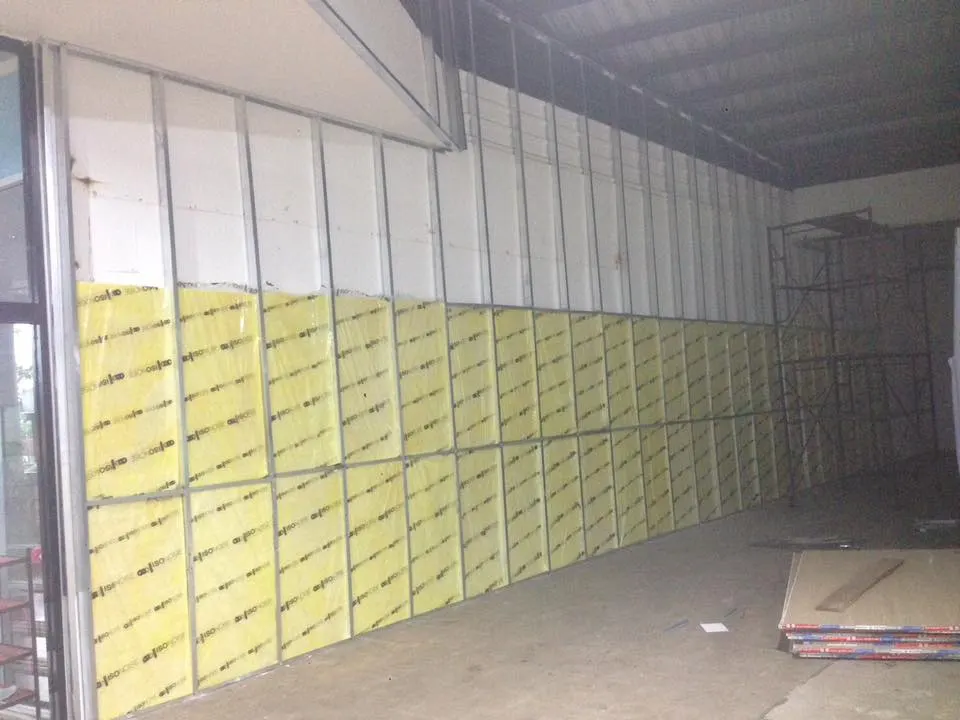
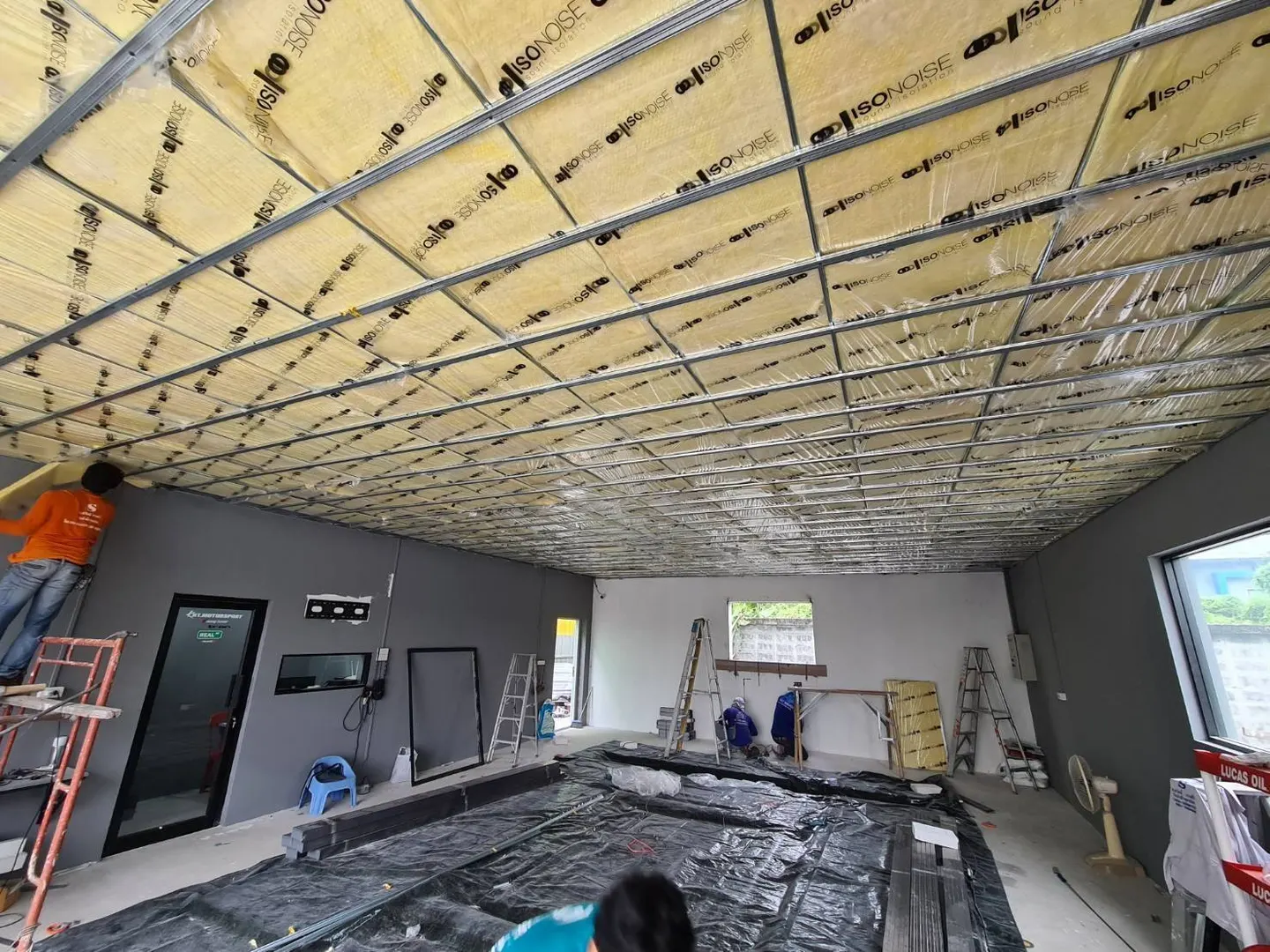
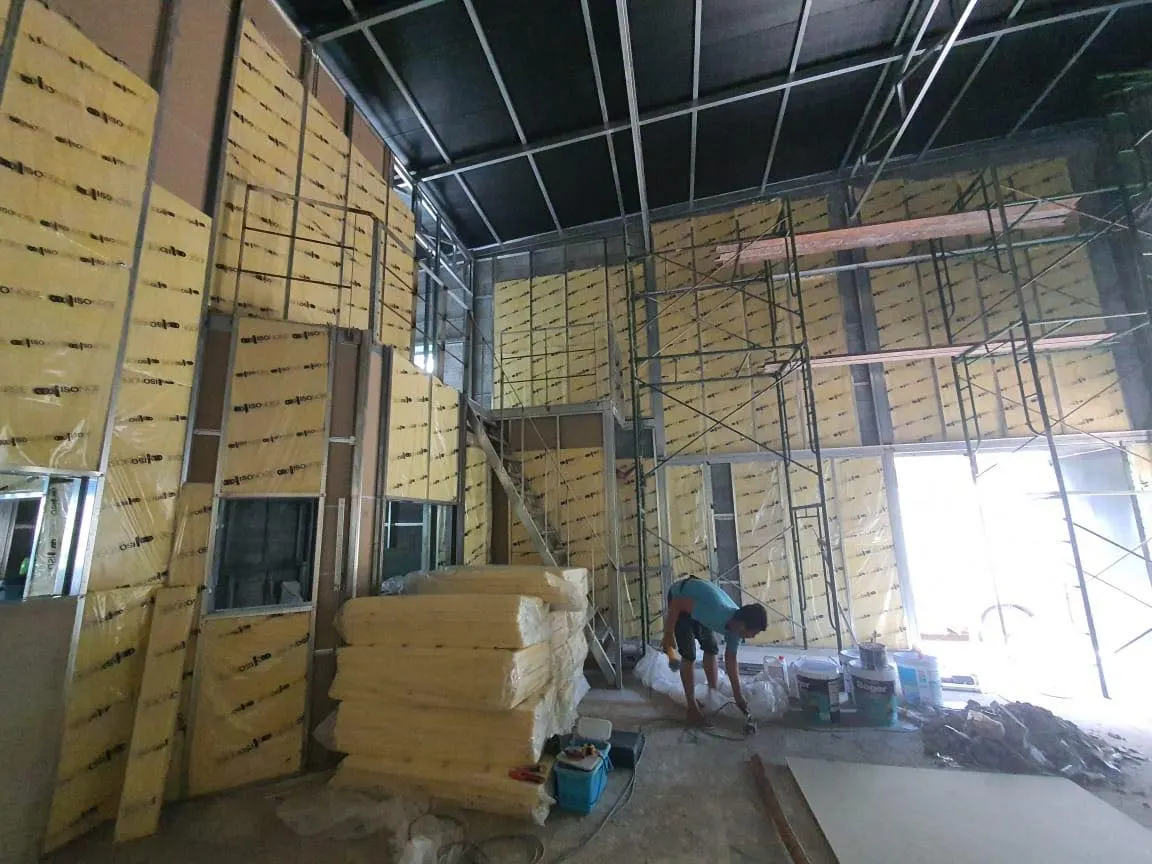
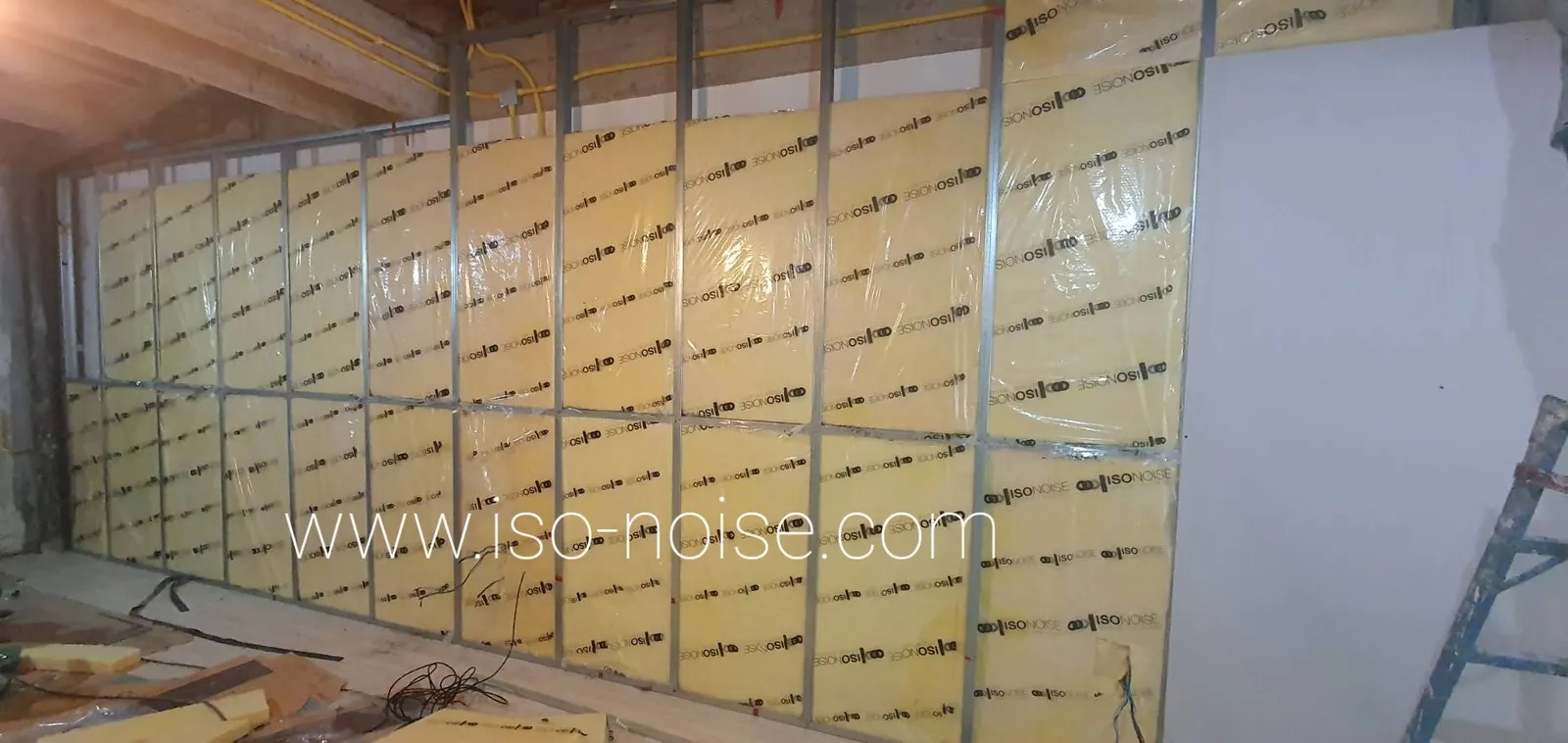
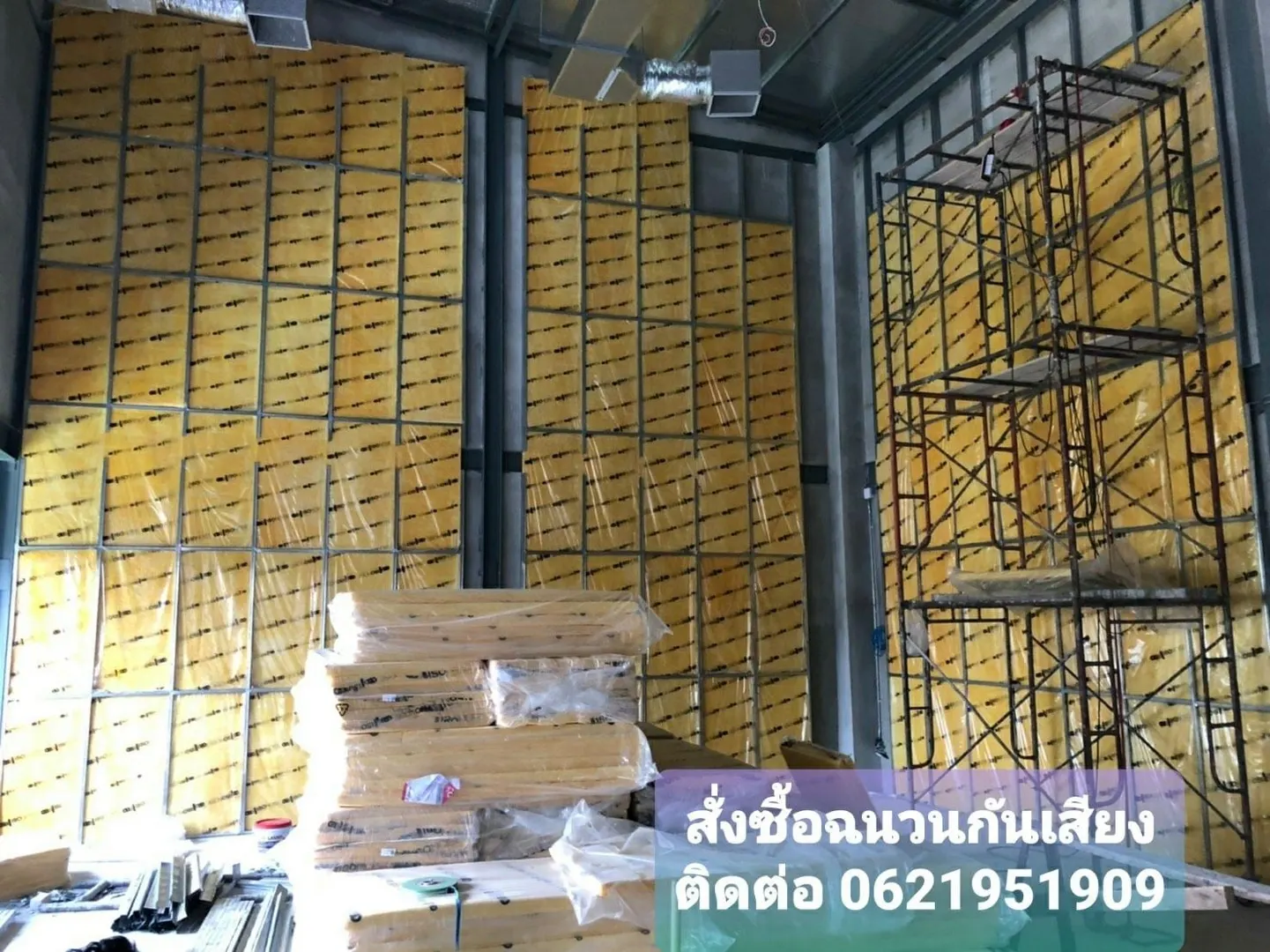
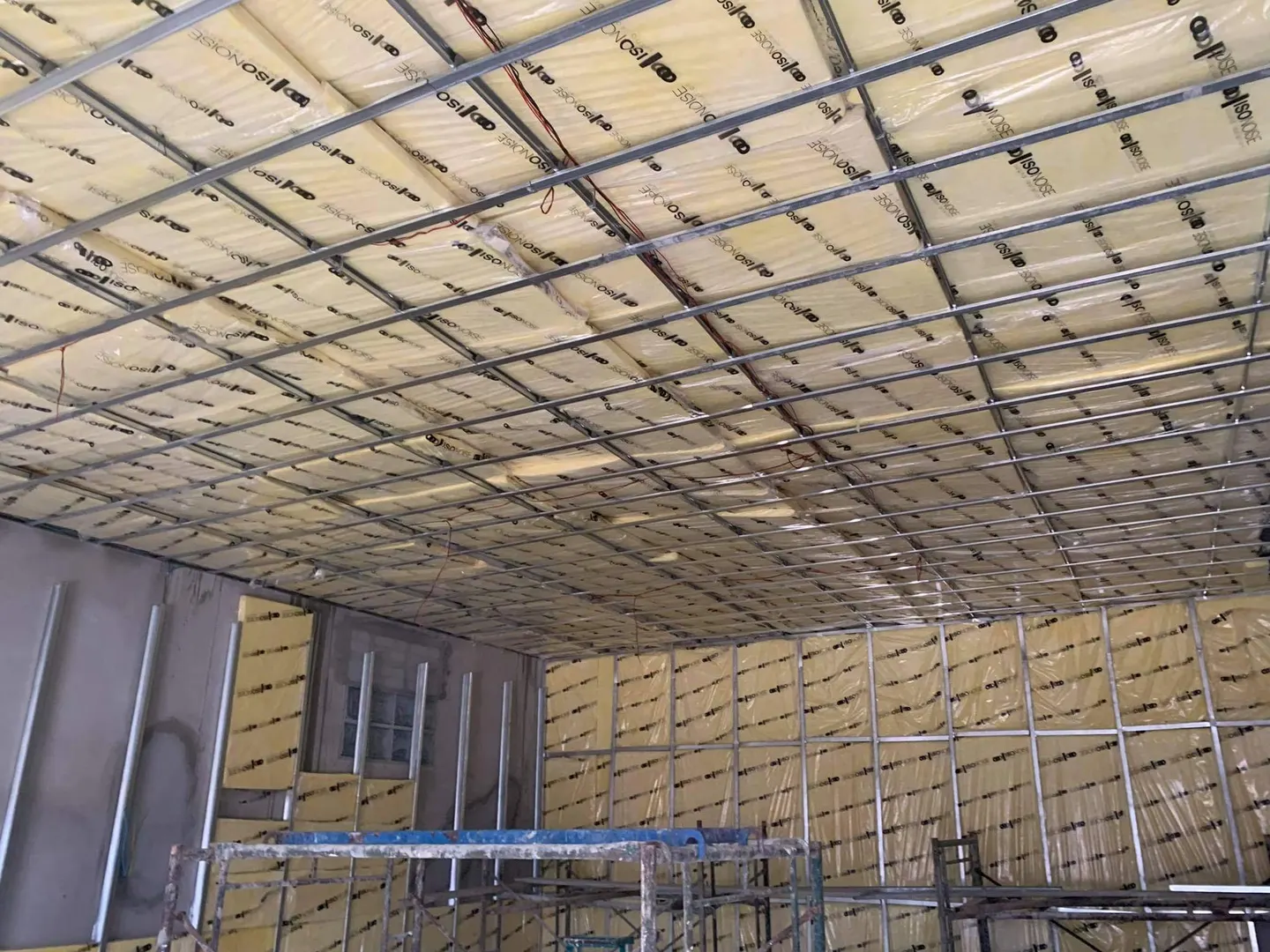
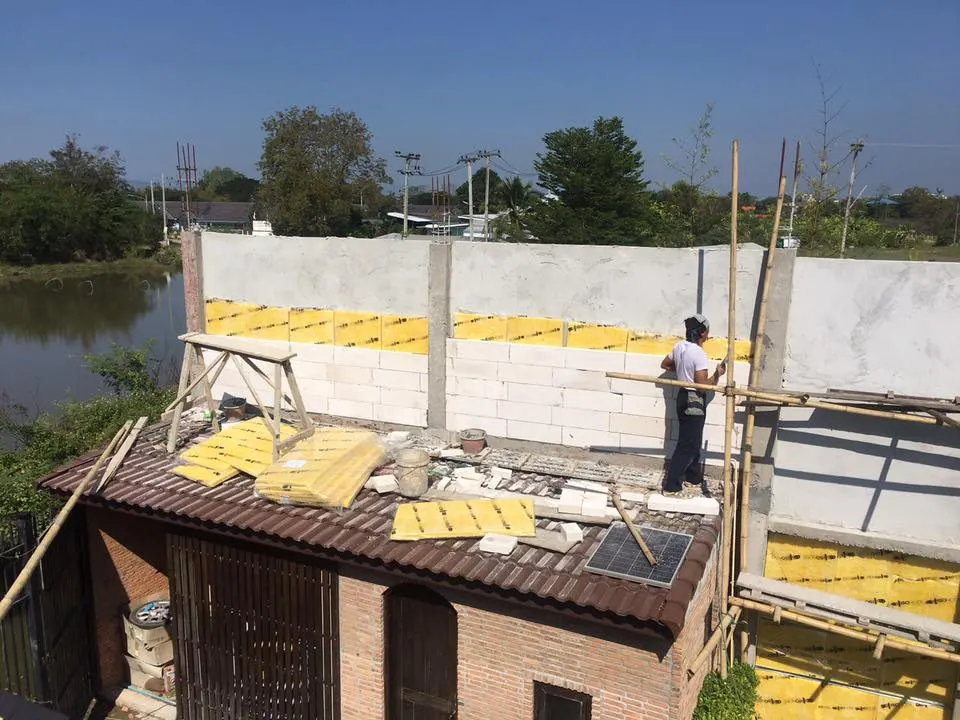
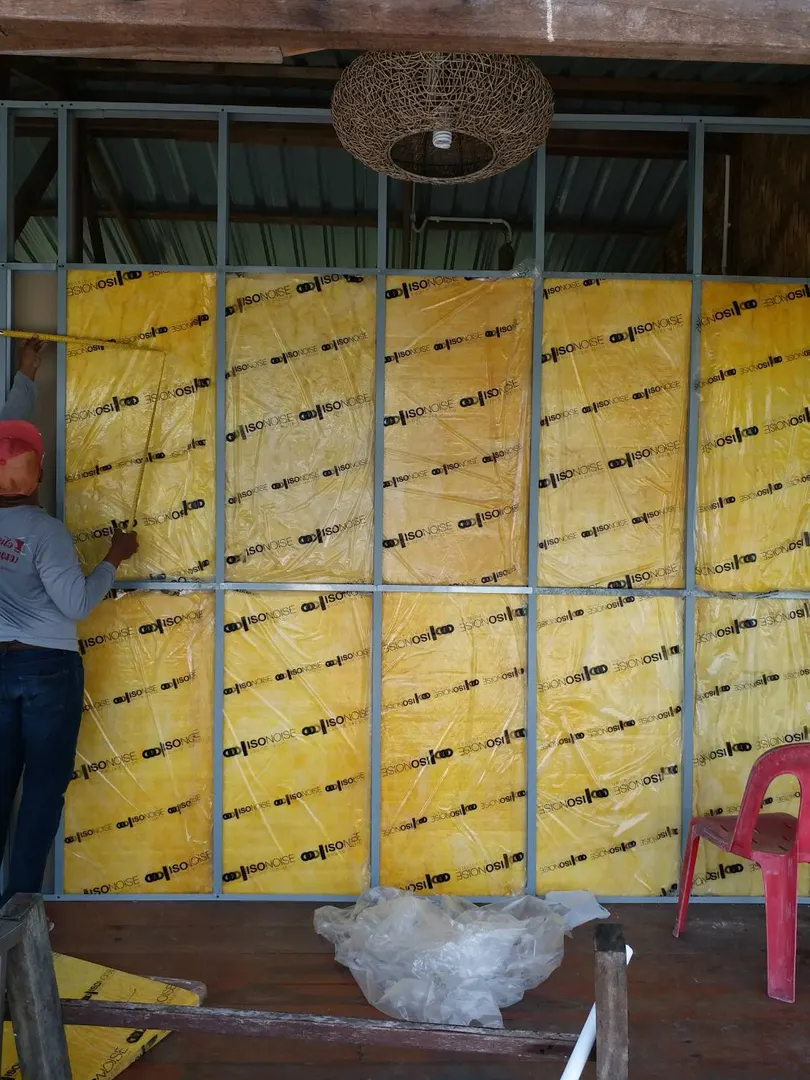
- Fit the batts, still in their clear PE bags, to fill the whole area of the lightweight wall or double-leaf masonry wall. No adhesive is needed.
- Where the wall does not match full sheets, cut the batt to fill the remaining area. No adhesive or tape is required.
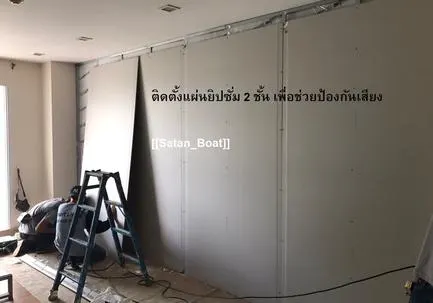
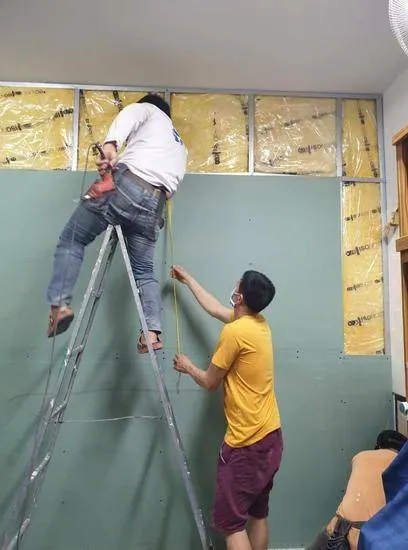
- Close the cavity with a solid layer such as gypsum board, fibre-cement board or brick so the wall system can block sound.
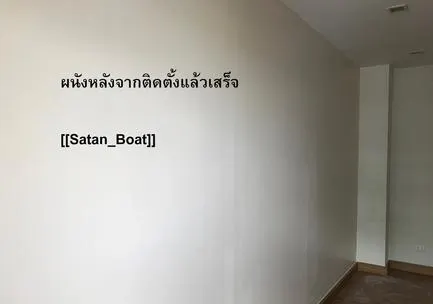
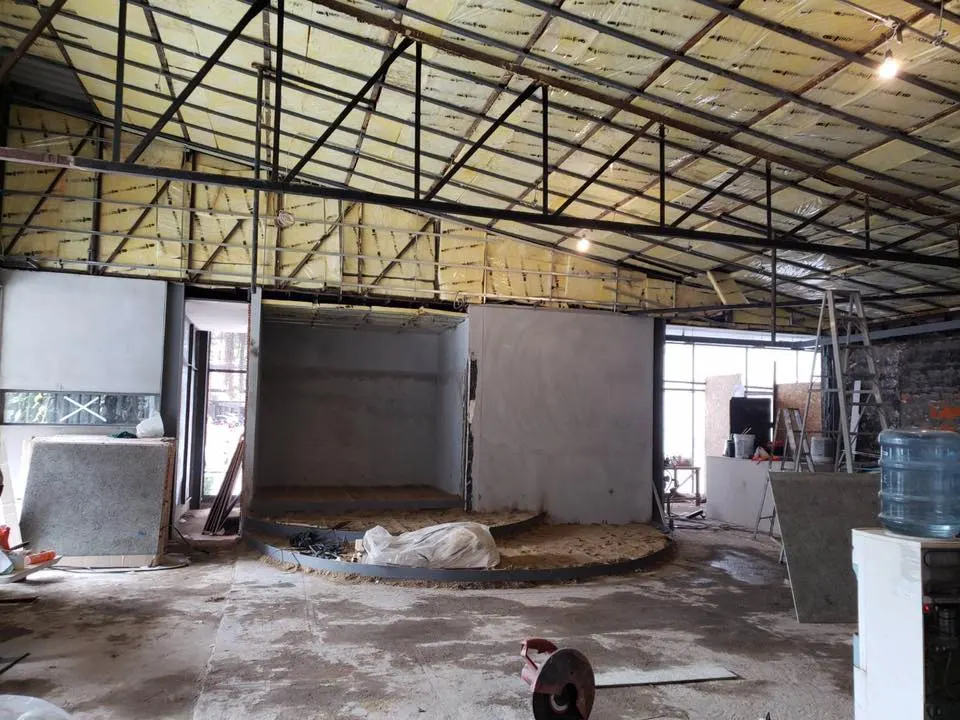
Installation photos for lightweight walls and double-leaf masonry walls (captions in Thai).
Documents
Download catalogue (PDF, Thai)
Product catalogue (PDF, Thai).
Frequently asked questions
How many decibels does ISO NOISE block?
Can I simply glue the batt onto an existing wall?
Should the plastic bag be removed before installation?
Is performance better with or without the bag?
What do I do with the bag after cutting a batt?
How does ISO NOISE compare with SCG Cylence ZoundBlock?
The batt is 50 mm thick. Can I get a thicker one?
Is the result guaranteed?
How do I order?
How does delivery outside Bangkok work, and what does it cost?
Talk to an acoustic engineer directly
Tell us the wall or ceiling area you need to treat. The engineer will calculate the number of sheets, recommend a suitable wall system and quote the goods with delivery anywhere in Thailand.